For students preparing for FBLA business competitions, FBLA presentation coaching is often the differentiator between a good score and a top placement. While many focus heavily on content accuracy, judges evaluate the entire performance package. This guide breaks down how to structure your practice sessions by isolating three critical pillars: delivery mechanics, visual aid effectiveness, and question-and-answer resilience.
The Three Pillars of Effective Practice
General feedback like “do better” is useless for competitive preparation. Instead, coaches and peers should rotate focus among three distinct areas during each rehearsal cycle. This prevents cognitive overload and allows for measurable improvement in specific skill sets.
| Pillar | Focus Area | Common Pitfall |
|---|---|---|
| Delivery | Voice projection, pacing, body language, eye contact. | Reading directly from slides or notes. |
| Slides | Visual clarity, data visualization, text density, flow. | Overcrowding charts with unnecessary detail. |
| Questions | Active listening, concise answering, handling curveballs. | Defensive responses or rambling answers. |
Refining Delivery Mechanics
Delivery is the vehicle for your message. In FBLA judged events, non-verbal cues significantly impact perceived confidence. Coaches should record rehearsals to analyze filler words, pace consistency, and posture. A common issue for international students is accent-related hesitation; practicing clear enunciation without sacrificing natural rhythm is key. Focus on connecting with the audience rather than performing for them.
Optimizing Slide Design for Impact
Slides are not scripts; they are visual anchors. Many competitors fail because their slides contain too much text, forcing judges to read instead of listen. Effective FBLA presentation coaching involves critiquing slide density. Each slide should support one main idea. Use high-contrast colors and simple charts. If a judge can’t grasp the point in five seconds, the slide needs revision. For topics requiring deep analysis, refer to resources like FBLA topics decoded to ensure your visuals align with the core prompt requirements.
Mastering the Q&A Session
The Q&A segment is where many strong presentations lose points. Judges test depth of knowledge and composure under pressure. Preparation should include mock questions that range from obvious to obscure. Students must learn to pause before answering, acknowledge the question’s validity, and provide a structured response. Avoid guessing if you don’t know; instead, pivot to what you do know or admit limitations gracefully. Drills focusing on this aspect are detailed in guides such as answering FBLA judges.
Structuring Your Coaching Sessions
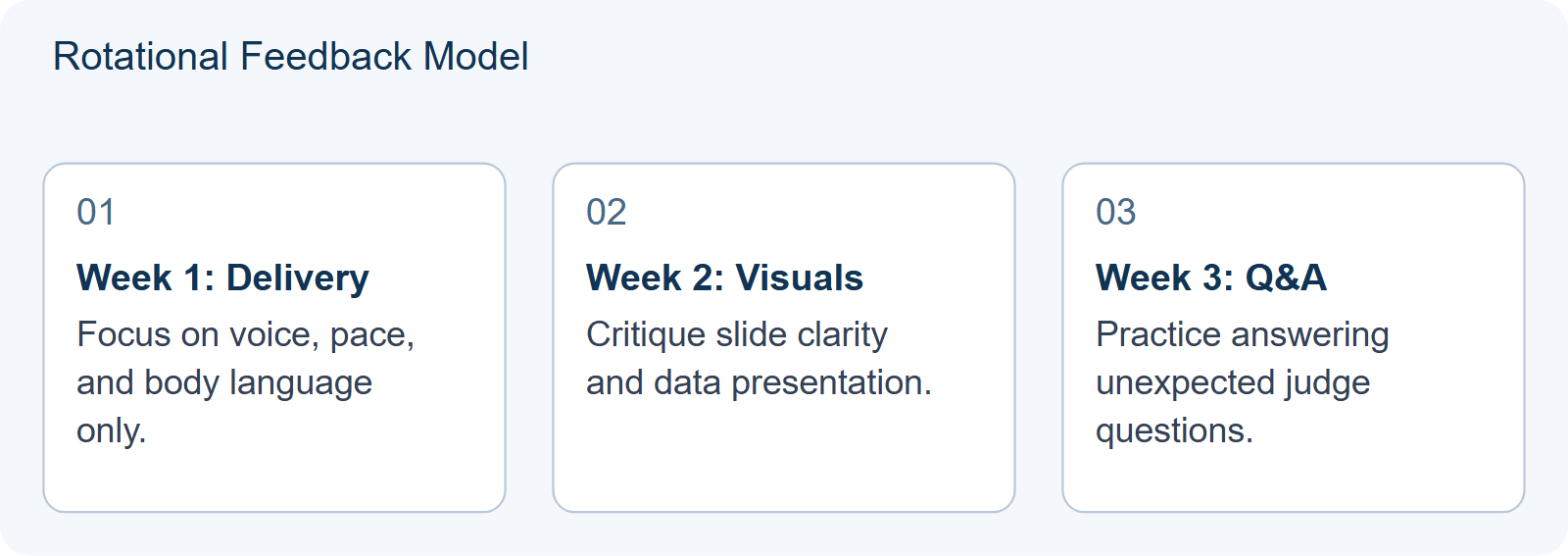
To maximize progress, adopt a rotational feedback model. Do not try to fix everything at once. Week 1 might focus solely on delivery, ignoring slide aesthetics. Week 2 shifts to visual aids, assuming delivery is stable. Week 3 tackles Q&A scenarios. This segmented approach builds muscle memory for each component independently before integrating them into full run-throughs.
Conclusion
Success in FBLA competitions relies on holistic presentation skills. By systematically addressing delivery, slides, and questions through targeted coaching, students can elevate their performance from competent to exceptional. Remember that consistent, focused practice yields better results than sporadic, unfocused effort.
HYPOTHETICAL/ILLUSTRATIVE: The ‘Slide-First’ vs. ‘Delivery-First’ Dilemma
To apply the rotational feedback model effectively, consider a common preparation crossroads faced by students with limited rehearsal time. Imagine a hypothetical competitor, Alex, who has three days before their business plan presentation. Alex’s slides are visually dense but logically sound, while their delivery is confident but occasionally rushed. The critical decision is not how to fix both simultaneously, but which pillar to prioritize in the first coaching session. This choice dictates the trajectory of the remaining practice cycles.
Option A involves focusing entirely on slide optimization. Alex spends the first day reducing text density and simplifying charts, assuming that clearer visuals will naturally slow down their pacing. Option B prioritizes delivery mechanics. Alex keeps the current slides but practices speaking slowly, using pauses for emphasis, and maintaining eye contact, accepting that the audience might struggle slightly with the visual clutter initially. Both approaches have merit, but they yield different outcomes based on specific performance weaknesses.
| Decision Factor | Choose Slide Optimization (Option A) | Choose Delivery Focus (Option B) |
|---|---|---|
| Primary Weakness | Judges cannot follow the argument without reading every word. | Judges lose interest due to monotone or erratic pacing. |
| Risk | Fixing slides may disrupt the flow if the script relies on specific visual cues. | Complex slides may distract judges from improved vocal clarity. |
| Best For | Data-heavy presentations where accuracy is paramount. | Persuasive pitches where emotional connection drives scoring. |
In this illustrative scenario, the deciding factor is the nature of the content. If Alex’s topic requires precise data interpretation, Option A is superior because confusing visuals undermine credibility regardless of vocal charm. However, if the topic is conceptual, such as leadership philosophy, Option B is better because engagement matters more than chart precision. By isolating one variable, Alex can measure improvement accurately. After choosing Option B, Alex records a run-through. They notice that slowing down actually helps them remember key points, reducing reliance on reading slides. This insight allows them to tackle slide simplification in the next cycle with a clearer understanding of what information needs visual support versus verbal explanation.
This example demonstrates why general advice fails. Without isolating the variable, Alex might blame poor scores on bad slides when the issue was actually nervous pacing. To apply this logic, use the following self-check before each coaching session: Identify the single most distracting element in your last recording. Is it a visual barrier (hard-to-read text) or an auditory barrier (mumbling)? Address only that barrier in the next session. Ignore all other flaws temporarily. This targeted approach ensures that feedback remains actionable and progress is measurable, preventing the paralysis of trying to perfect everything at once.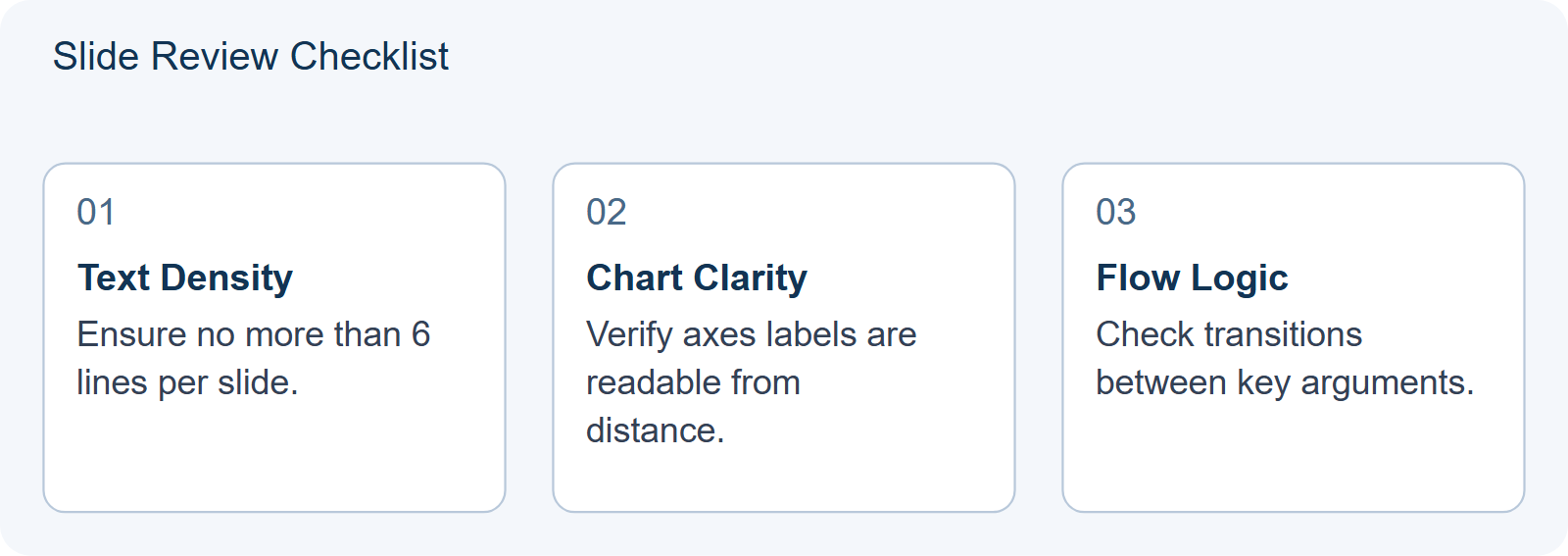
Frequently Asked Questions
How often should I practice my presentation?
Daily short drills are better than weekly long sessions. Aim for 15-20 minutes of focused practice on one pillar at a time.
Do judges penalize accents?
No, but clarity matters. Ensure your pronunciation does not hinder understanding. Practice difficult terms repeatedly.
What if I don't know an answer?
Admit it honestly and offer related insights. Never guess wildly or become defensive. Composure scores points.